Prevention Of Sleep Apnea Risks
Author Name: Heidi Holvoet, PhD
Because it's potentially life threatening in children and babies, the
prevention of
sleep apnea risks
, early diagnosis and
medical solutions
(monitor, CPAP, surgery, etc.) are crucial.
Strictly speaking, the term 'apnea' means nothing more than 'breathing
pause'. All healthy kids, and especially young babies, have these breathing
pauses normally.
It's when the pauses become long (+20 seconds for a baby, +10 seconds
for a child) that it becomes a condition that can be life threatening
and/or cause severe health problems.
In most cases, sleep apnea - the condition - cannot be prevented as it
is a physical condition: brain signal failure in central and airway blocking in obstructive sleep apnea.
The main action step is in
preventing
the too long breathing
pauses
in order to reduce the risks they create.
Risks
The risks of severe
apnea in babies
include death and lasting heart or brain
damage. Very poor night and nap quality is a less serious effect but it can
lead to health problems too, and of course make your baby
uncomfortable, cranky and irritable.
Severe
apnea in children
and toddlers of 2 years and older can cause
developmental and growth problems as well as heart problems. Learning
difficulties and behavioral problems such as frustration,
aggressiveness, anxiety and social difficulties are also common.
Prevention of Sleep Apnea Risks
Early
diagnosis
is the key in preventing the most risks. If your baby or child shows any of the
symptoms and signs
, do not hesitate and consult your doctor right
away.
Ideally a specialized pediatric center will perform a
sleep study
or take
an overnight
polysomnography
to confirm the apnea or rule it out.
Once diagnosed, the best-suited of the different
treatments and solutions
must be selected. Available
solutions
include an apnea or breathing monitor, medication, a CPAP
machine and in +2 year olds tonsil surgery.
There is some controversy about a possible link with
sudden
infant death syndrome
(SIDS). Researchers have not shown a
conclusive link (SIDS remains unexplained, contrary to sleep apnea).
Still as a general measure
crib
safety guidelines
remain crucial: starting with
a well-aired, a not too hot not too cold room and a safe crib or
bed.
Being overweight can also be a factor so
losing weight
can be
part of the prevention of sleep apnea.
Also consult your pediatrician for more advice and preventative measures.
Sleep Apnea
Worried? Questions? Ask me
Article Author: Heidi Holvoet, PhD - Founder, senior sleep consultant
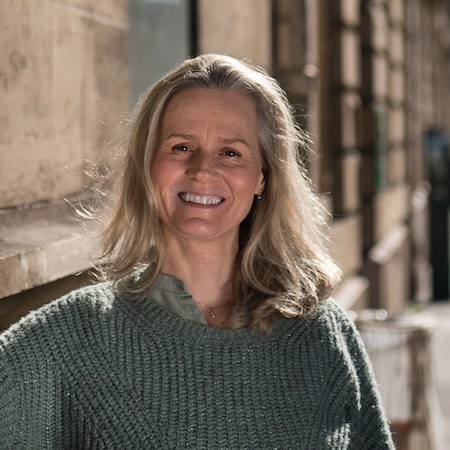
Heidi Holvoet, PhD, is the founder of the Baby Sleep Advice website and movement, an award-winning author, baby & toddler sleep consultant with 17+ years experience as well as a certified lactation counselor.
Over the years, Heidi has received several awards inluding a Mom's Choice Award (MCA) and National Parenting Awards (NAPPA) for her Baby Sleep Advice website, programs and books. Also, Baby Sleep Advice was awarded "Most Trusted Infant's Sleep Solutions Company 2023" in the Benelux Enterprise Awards 2023.
Heidi continually conducts personal research and participates in continued education and in that way stays up to date with current scientific and pyschosocial infant care.
She is also a member of the Association of Professional Sleep Consultants of which she was one of the earliest contributors. She obtained her PhD degree in physics at the University of Ghent in Belgium.
Heidi is passionate about helping babies and their parents sleep more and better, with her trademark holistic and truly-no-tears approach that has been proven and praised time and again by parents worldwide to be effective and truly no-tears. Respect for you as a parent and your baby, is at the heart of Heidi's warm and kind support. Her approach always keeps in mind a baby's needs and abilities at any given age, is based on pediatric science and the most up to date knowledge in infant care and sleep science.
As well as the award-winning baby sleep programs, Heidi offers popular 1:1 consults and easy-access 30-minute SOS Sleep sessions.
Back to the
Sleep disorder overview
Baby waking every hour?
by Heidi Holvoet, PhD
Sleep schedules by age
by Heidi Holvoet, PhD
Separation Anxiety
by Heidi Holvoet, PhD
Crib safety guidelines
by Heidi Holvoet, PhD

Why does my baby wake up every hour?
by Heidi Holvoet, PhD
'%3e%3cg id='Final-Copy-2_2_' transform='translate(1275.000000, 200.000000)'%3e%3cpath class='st0' d='M7.4,12.8h6.8l3.1-11.6H7.4C4.2,1.2,1.6,3.8,1.6,7S4.2,12.8,7.4,12.8z'/%3e%3c/g%3e%3c/g%3e%3c/g%3e%3cg id='final---dec.11-2020'%3e%3cg id='_x30_208-our-toggle' transform='translate(-1275.000000, -200.000000)'%3e%3cg id='Final-Copy-2' transform='translate(1275.000000, 200.000000)'%3e%3cpath class='st1' d='M22.6,0H7.4c-3.9,0-7,3.1-7,7s3.1,7,7,7h15.2c3.9,0,7-3.1,7-7S26.4,0,22.6,0z M1.6,7c0-3.2,2.6-5.8,5.8-5.8 h9.9l-3.1,11.6H7.4C4.2,12.8,1.6,10.2,1.6,7z'/%3e%3cpath id='x' class='st2' d='M24.6,4c0.2,0.2,0.2,0.6,0,0.8l0,0L22.5,7l2.2,2.2c0.2,0.2,0.2,0.6,0,0.8c-0.2,0.2-0.6,0.2-0.8,0 l0,0l-2.2-2.2L19.5,10c-0.2,0.2-0.6,0.2-0.8,0c-0.2-0.2-0.2-0.6,0-0.8l0,0L20.8,7l-2.2-2.2c-0.2-0.2-0.2-0.6,0-0.8 c0.2-0.2,0.6-0.2,0.8,0l0,0l2.2,2.2L23.8,4C24,3.8,24.4,3.8,24.6,4z'/%3e%3cpath id='y' class='st3' d='M12.7,4.1c0.2,0.2,0.3,0.6,0.1,0.8l0,0L8.6,9.8C8.5,9.9,8.4,10,8.3,10c-0.2,0.1-0.5,0.1-0.7-0.1l0,0 L5.4,7.7c-0.2-0.2-0.2-0.6,0-0.8c0.2-0.2,0.6-0.2,0.8,0l0,0L8,8.6l3.8-4.5C12,3.9,12.4,3.9,12.7,4.1z'/%3e%3c/g%3e%3c/g%3e%3c/g%3e%3c/g%3e%3c/svg%3e) Your Privacy Choices
Your Privacy Choices