
Preventing SIDS? Reduce the risk!
Author Name: Heidi Holvoet, PhD
Medical fact-check: Dr Leah Alexander, M.D., F.A.A.P.
Sadly, preventing SIDS completely is not possible today. There is no cure or vaccine to prevent crib death. But you can reduce the risk as much as possible by following a few simple rules , especially during the first 12 months. Follow the guidelines as much for naps as for night time sleep.
4 simple gestures to protect your baby
-
No smoking
- Baby sleeps on her back
-
Baby never gets too hot
- Baby sleeps in a safe crib, under close supervision
These are the simplest and most effective ways to protect your child.
They are the best chance we have for preventing SIDS.
See below for
details and further
guidelines, and
practical tips.
How do we know these guidelines help? In the late 80s-early 90s, many
governments launched
Back
to Sleep
campaigns to recommend these precautions, and the
sleeping on the back position in particular.
SIDS rates reduced dramatically in the following years so the
guidelines remain recommended worldwide.
[2]
Guidelines to help prevent SIDS and tips to make them work

1. No smoking
There is a dramatic relationship between
smoking
and SIDS
.
Do not smoke
during pregnancy and do not let anyone smoke near your baby or in any
room where your baby stays.
2. Baby sleeps on her back
The only safe
sleeping
position
is lying on the back.
Always put
your little one
on her back
when you put her to sleep, nap time, snooze time and night time.
3. Baby must never get too hot
To prevent
overheating: keep the
room
temperature
between 61 and 68 degrees F (16-20ºC)
. During hot summer nights: compensate with
extra light clothing and cover.
Choose
light clothing
and covers
: a light sleeping bag is ideal. It helps keep
your child on her back, she will not get uncovered and cold and
cannot get trapped under it.
Blankets, quilts, duvets, comforters etc. are
NOT
considered to be safe
.
4. Baby sleeps in a safe crib, under close supervision
Crib
safety
is a very important step towards preventing SIDS.
Ideally during the first months, keep your baby in the room with you.
Your presence
by itself is proven to improve protection
.
Many parents find that their movement easily wakes up their little one
from
about 4 to 6 months.
When that happens, and you feel confident about
your baby's development, and there are none of the
SIDS risk factors
playing,
you can have her sleep in another room.
Continue to
check frequently on her and ensure you can monitor as well as if you were in the same room.
The 2016 updated recommendations for safe infant sleeping environment
by the AAP advise that a baby sleeps in her parent's room ideally for
the full first year, and at least for the first 6 months.
[5]
... or co-sleeps safely
Co-sleeping
is
still disadvised officially
by many institutions, although
given studies state
that in certain circumstances,
co-sleeping
can offer protection from
SIDS
.
[3]
Always duly follow all
co-sleeping
safety guidelines
.
According to latest research,
safe
co-sleeping does not increase the risk
.
However,
when either
parent smokes, drinks alcohol, takes medication or is extremely tired,
co-sleeping is not safe
and is an increased risk factor.
[4]
Also if your baby is
premature or light-weight you'd rather avoid bed sharing.
A bedside
co-sleeper
(a cot attached to your bedside) can be a good alternative.
SIDS has
also
occurred when babies were sleeping on the couch or sofa with their
parents.
5. Using a dummy
Using a
pacifier or dummy
has been shown to reduce SIDS risk.
Since dummy-use may interfere with breastfeeding (another protector
from SIDS) it is best to wait until breastfeeding is well established
before offering a dummy to your baby.
6. Breastfeeding
Breastfeeding your baby can offer increased protection from crib death.
7. Don't force sleep
Never try
to
make your small child sleep longer or better by over-feeding or with
medication.
She may
go into too deep sleep and be at risk of cot death.
Don't allow these pages to make you anxious.
Just keep the guidelines for preventing SIDS in mind, consult a medical professional to assess your baby, be extra
careful when your
baby is at a
higher
risk
, and then have confidence in your instincts.
Article Author: Heidi Holvoet, PhD - Founder, senior sleep consultant
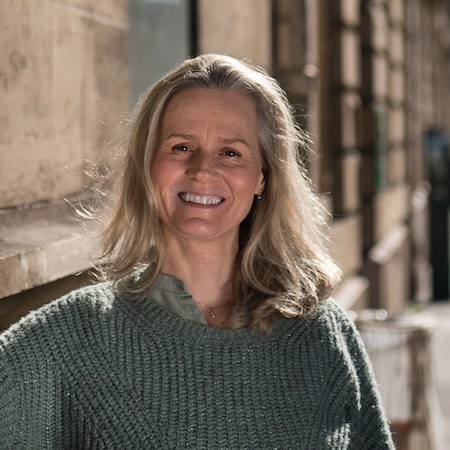
Heidi Holvoet, PhD, is the founder of the Baby Sleep Advice website and movement, an award-winning author, baby & toddler sleep consultant with 15+ years experience as well as a certified lactation counselor.
Over the years, Heidi has received several awards inluding a Mom's Choice Award (MCA) and National Parenting Awards (NAPPA) for her Baby Sleep Advice website, programs and books. Also, Baby Sleep Advice was awarded "Most Trusted Infant's Sleep Solutions Company 2023" in the Benelux Enterprise Awards 2023.
Heidi continually conducts personal research and participates in continued education and in that way stays up to date with current scientific and pyschosocial infant care.
She is also a member of the Association of Professional Sleep Consultants of which she was one of the earliest contributors. She obtained her PhD degree in physics at the University of Ghent in Belgium.
Heidi is passionate about helping babies and their parents sleep more and better, with her trademark approach that has been proven and praised time and again by parents worldwide to be effective and truly no-tears. Respect for you as a parent and your baby, is at the heart of Heidi's warm and kind support. Her approach always keeps in mind a baby's needs and abilities at any given age, is based on pediatric science and the most up to date knowledge in infant care and sleep science.
As well as the award-winning baby sleep programs, Heidi offers popular 1:1 consults and easy-access 30-minute SOS Sleep sessions.
Resources
[1]
International
trends in sudden infant death syndrome
Hauck RF,
Tanabe KO. 2008.
Pediatrics
122(3):
660-666.
[2]
The Lullabytrust - Rates of SIDS reach new record low but The Lullaby Trust warns against complacency
Available from
https://www.lullabytrust.org.uk/ons-2015/
(opens in new window).
[3]
Parent-infant
cosleeping: the appropriate context for the study of infant sleep and
implications for sudden infant death syndrome (SIDS) research
Sarah Mosko, James Mckenna, Lynn Hunt 2004
Journal of
Behavioral Medicine
16
(6): 589–610
.
[4]
Hazardous cosleeping
environments and risk factors amenable to change: case-control study of
SIDS in South West England.
Peter S. Blair and
co.a
British
Medical
Journal
BMJ 2009;339:b3666.
https://www.bmj.com/cgi/content/abstract/339/oct13_1/b3666
(opens in new window)
[5]
SIDS and Other Sleep-Related Infant
Deaths: Updated 2016 Recommendations for a Safe Infant Sleeping
Environment.
TASK FORCE ON SUDDEN INFANT DEATH
SYNDROME
https://pediatrics.aappublications.org/content/early/2016/10/20/peds.2016-2938
(opens in new window)

Baby waking every hour?
by Heidi Holvoet, PhD

Sleep schedules by age
by Heidi Holvoet, PhD

Separation Anxiety
by Heidi Holvoet, PhD
Crib safety guidelines
by Heidi Holvoet, PhD

Why does my baby wake up every hour?
by Heidi Holvoet, PhD